











 |
|
 |
|
 |
|
 |
|
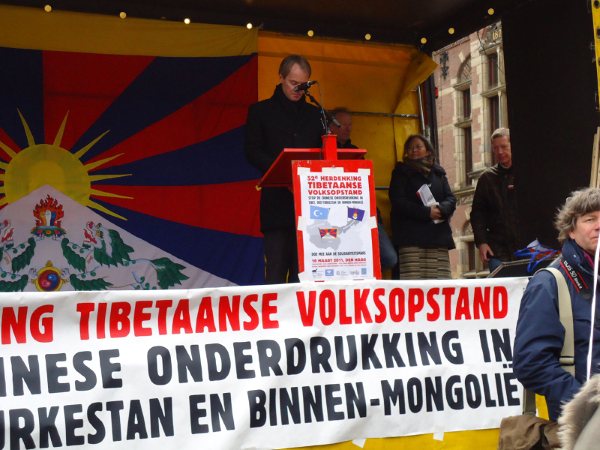
Ladies and Gentlemen,
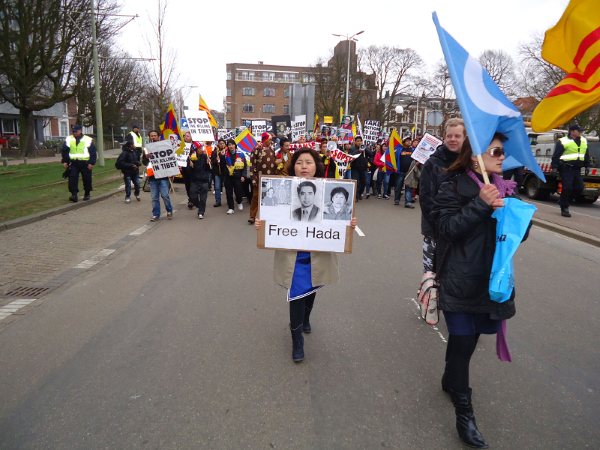
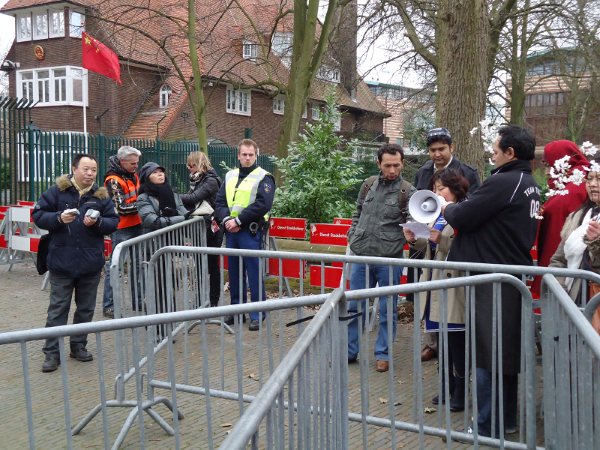
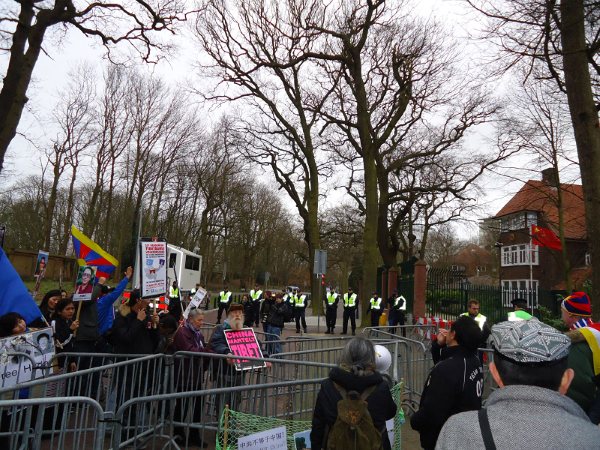
My name is Sainbilig Batzargal. I am an ethnic Mongolian from the Chinese-occupied Southern Mongolia. On behalf of the Southern Mongolian Human Rights Information Center (SMHRIC), I would like to bring to your attention the case of Mr. Hada, a prominent ethnic Mongolian dissident who spent 15 years in a Chinese prison on baseless charges of “separatism” and “espionage” and then was immediately taken into detention on his scheduled release day. Equally disturbing is that his wife and son were also taken into police custody the week prior to his release date.
Although the Chinese authorities have been consistent in their attempts to convince the international community that Hada is free by releasing pictures and videos of Hada and his family via unofficial channels, there has been no official word from the authorities on the family’s whereabouts and current condition. It is still unclear whether the members of the family are kept incommunicado together or separately. Contact with their relatives remains strictly prohibited. This is particularly concerning since both Mr. Hada and his wife are ill.
Mr. Hada, an ethnic Mongolian scholar, founded the Southern Mongolian Democratic Alliance (SMDA) to promote Mongolian culture and ethnic identity among the Mongols in China, and to advocate Southern Mongolian democracy and human rights. Although the activities of the SMDA were completely in keeping with the laws of China, Mr. Hada was accused of trumped up charges related to ‘splittism’ and sentenced to an exceptionally long jail term. He suffered unbearably inhumane treatment in prison. Following Mr. Hada’s imprisonment, his family-run book shop was forcibly closed several times by Chinese authorities and his wife and son were frequently harassed and interrogated. His son had to drop out from high school to struggle for a living. The family was supposed to have been reunited after this long traumatic separation on December 10, 2010. However as of today, almost three months following his scheduled release, there is no official notice from the Chinese authorities regarding the whereabouts of the family.
I would like to ask that the European Parliament and governments of European countries help find effective channels of communication to the government of China to free Mr. Hada and his family. I also urge them to pressure the Chinese Government to release all Southern Mongolian political dissidents and activists who have either been detained, imprisoned or put under house arrest for expressing their political opinions or defending the basic human rights and fundamental freedom of the Mongols in China.
Thank you,
Sainbilig Batzargal
Southern Mongolian Human Rights Information Center
Tel/fax: 001-718-786-9236
Website: www.smhric.org
Email: webmaster@smhric.org
FaceBook: Southern Mongolian Human Rights



 Changing
Inner Mongolia: Pastoral Mongolian Society and the Chinese State (Oxford
Studies in Social and Cultural Anthropology)
Changing
Inner Mongolia: Pastoral Mongolian Society and the Chinese State (Oxford
Studies in Social and Cultural Anthropology) Grasslands
and Grassland Science in Northern China: A Report of the Committee
on Scholarly Communication With the People's Republic of China
Grasslands
and Grassland Science in Northern China: A Report of the Committee
on Scholarly Communication With the People's Republic of China
